One of the resaons we uploaded our thriller opening to YouTube was to gain feedback from people who viewed the finished piece. Due to the vast range of videos on the site, we unfortunately had not comment, so resorted to using the social networking cycle. As the popular website Facebook has a newsfeed (which allows 'friends' to view what has been posted instantly), we posted our thriller sequence to obtain quick comments of both praise & critisism from those online.
-Chicagofairy "The music goes well with the video- its got a real creepy feel"
-"I like the use of slow motion and fast motion to indicate the rush"
-"The email, gun shot and missing posters were a nice touch"
-"I really like the point of view running, really captures what the escapee's are feeling and doing".
Wednesday, 28 April 2010

Tuesday, 27 April 2010
'Helpless'
Here is our finished thriller opening, 'Helpless'. We uploaded the finished piece onto YouTube, where it can Be accessed by any who wish to watch it, this method will also allow us to acquire a range of feedback- a crucial element to film making.
Sunday, 25 April 2010
Audio
For our soundtrack we wanted an piece of audio that created drama, tension and an element of vulnerability. This criteria lead us to think an orchestral track would be appropriate, but after playback over the filmed material, we didn't' feel it fit the scenes of the car. We looked at soundtracks used on some popular action thrillers, but again, found them unsuitable, on this occasion due to the situation the characters were in. This lead us to looking at what our own musical taste was, as today's' music scene contains a wide range of acoustic/ indie sounds, and listening to our own preferences.
We found some fairly unknown tracks by a band, The Temper Trap and decided one a track titled 'Soldier On'. we feel its fits our criteria perfectly, as the strings on the acoustic guitar create an almost sinister feel, and the occasional high-pitch of vocal emphasises aspects in the sequence, such as the headlights down the alley.
We found some fairly unknown tracks by a band, The Temper Trap and decided one a track titled 'Soldier On'. we feel its fits our criteria perfectly, as the strings on the acoustic guitar create an almost sinister feel, and the occasional high-pitch of vocal emphasises aspects in the sequence, such as the headlights down the alley.
Wednesday, 14 April 2010
Film Classification
The British Board of Film Classification, or BBFC is responsible for efficient classifications of cinema films. The stated information advises the public on suitability of content, allowing appropriate viewing choices without restricting freedom.

U (Universal)
Suitable for all
A‘U’ film should be suitable for audiences aged four years and over. ‘U’ films should be set within a positive moral framework and should offer reassuring counterbalances to any violence, threat or horror.

PG (Parental Guidance)
General viewing, but some scenes may be unsuitable for young children
Unaccompanied children of any age may watch. A ‘PG’film should not disturb a child aged around eight or older. However, parents are advised to consider whether the content may upset younger or more sensitive children.

12A/12
Suitable for 12 years and over
Exactly the same criteria are used to classify works at ‘12A’ and ‘12’. These categories are awarded where the material is suitable, in general, only for those aged 12 and over. Works classified at these categories may upset children under 12 or contain material which many parents will find unsuitable for them. The ‘12A’ category exists only for cinema films. No one younger than 12 may see a ‘12A’ film in a cinema unless accompanied by an adult, and films classified ‘12A’ are not recommended for a child below 12. An adult may take a younger child if, in their judgement, the film is suitable for that particular child. In such circumstances, responsibility for allowing a child under 12 to view lies with the accompanying adult.

15
Suitable only for 15 years and over
No one younger than 15 may see a ‘15’ film in a cinema. No one younger than 15 may rent or buy a ‘15’ rated video work.


R18

U (Universal)
Suitable for all
A‘U’ film should be suitable for audiences aged four years and over. ‘U’ films should be set within a positive moral framework and should offer reassuring counterbalances to any violence, threat or horror.

PG (Parental Guidance)
General viewing, but some scenes may be unsuitable for young children
Unaccompanied children of any age may watch. A ‘PG’film should not disturb a child aged around eight or older. However, parents are advised to consider whether the content may upset younger or more sensitive children.

12A/12
Suitable for 12 years and over
Exactly the same criteria are used to classify works at ‘12A’ and ‘12’. These categories are awarded where the material is suitable, in general, only for those aged 12 and over. Works classified at these categories may upset children under 12 or contain material which many parents will find unsuitable for them. The ‘12A’ category exists only for cinema films. No one younger than 12 may see a ‘12A’ film in a cinema unless accompanied by an adult, and films classified ‘12A’ are not recommended for a child below 12. An adult may take a younger child if, in their judgement, the film is suitable for that particular child. In such circumstances, responsibility for allowing a child under 12 to view lies with the accompanying adult.
-The ‘12’ category exists only for video works. No one younger than 12 may rent or buy a ‘12’ rated video work.

15
Suitable only for 15 years and over
No one younger than 15 may see a ‘15’ film in a cinema. No one younger than 15 may rent or buy a ‘15’ rated video work.

18
Suitable only for adults
No person under the age of 18 may view an ‘18’ film in a cinema., also no-one younger than 18 may rent or buy an ‘18’ rated video. Foll wing the Human Rights Act 1998, BBFC's ‘18’ classification allows rational freedom for adult viewing. Exceptions are possible where viewing material breaches the criminal law, inappropriate behaviour e.g portrayal of drug abuse, sexual assault, or violence, or where explicit sexual content cannot be justified by context.
Suitable only for adults
No person under the age of 18 may view an ‘18’ film in a cinema., also no-one younger than 18 may rent or buy an ‘18’ rated video. Foll wing the Human Rights Act 1998, BBFC's ‘18’ classification allows rational freedom for adult viewing. Exceptions are possible where viewing material breaches the criminal law, inappropriate behaviour e.g portrayal of drug abuse, sexual assault, or violence, or where explicit sexual content cannot be justified by context.

R18
To be shown only in specially licensed cinemas, or supplied only in licensed sex shops, and to adults of not less than 18 years
The ‘R18’ category is a special and legally restricted classification primarily for explicit works of consenting sex or strong fetish material involving adults. Films may only be shown to adults in specially licensed cinemas, and video works may be supplied to adults only in licensed sex shops. ‘R18’ video works may not be supplied by mail order.
*all information courtesy of http://www.bbfc.co.uk/*
The ‘R18’ category is a special and legally restricted classification primarily for explicit works of consenting sex or strong fetish material involving adults. Films may only be shown to adults in specially licensed cinemas, and video works may be supplied to adults only in licensed sex shops. ‘R18’ video works may not be supplied by mail order.
*all information courtesy of http://www.bbfc.co.uk/*
With regards to the classifications of the BBFC, I think our thriller would fall into the category of either '12' 0r '15'. The opening scenes are not material associated with the typical '15' rating of a thriller film, however, when producing storyboards, we established a basic plot for the remainder of the film, which would push the criteria boundary of a '12' certificate.
Saturday, 27 March 2010
An Insight into Thriller Footage...
Inspiration and ideas
To gain an insight into the conventions of the thriller genre, as a group we watched a variety of opening scenes to give us inspiration as to what impact can be made on the audience within the first few minutes, the films which demonstrated this included;
- Taking Lives
- No Country for Old Men
- Se7en
By viewing these films as a group, we were able to identify the key elements that utilise the opening filming sequence, establishing plot and gaining audience intrigue.
'Psycho'
Alfred Hitchcock's iconic 1960 thriller 'Psycho' creates tension and suspense throughout the storyline. This particular extract, of the shower scene was, and remains to be one of the most iconic sequence of film making. At first glance the audience is hit with shock from the brutality of the stabbing, however, when watched more analytically, Hitchcock has actually used a clever combination of sound effects and quick cut editing to illustrate the sequence and that no visual violence can be traced. This play on human emotion and imagination has inspired modern day thriller hits, such as 'Taking Lives', and, even though the planning for our thriller opening does not include footage of similar theme, the technique will be considered for any future material filmed.
Monday, 22 March 2010
Location Scouting
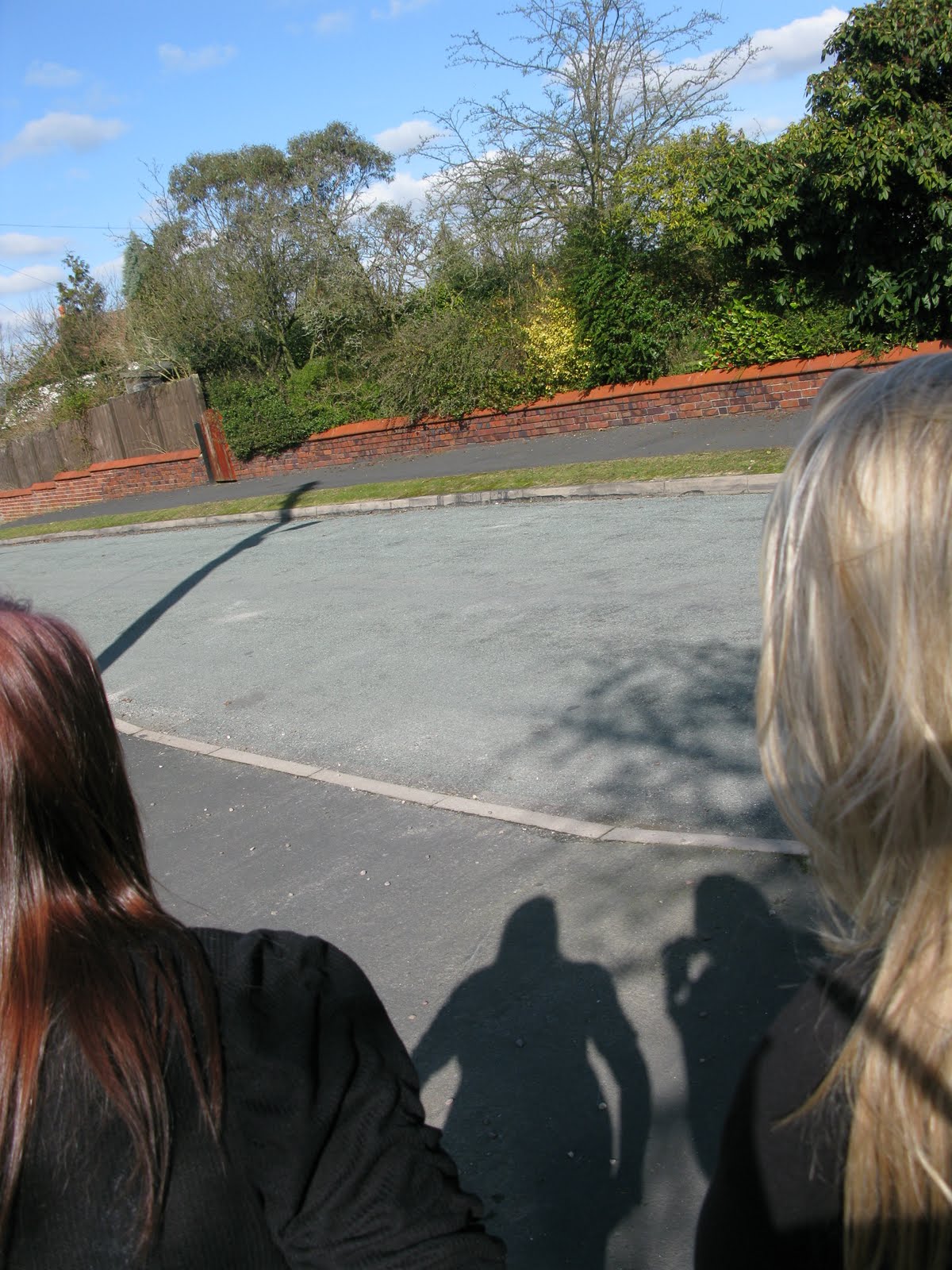
Once we had established the basic plot for our thriller opening, we began to research various locations which would suit the story. Using a stills camera, we photographed possible areas which could create the desired effect when it came to filming.


Brainstorming/ Storyboards
Initial Planning
Here is a basic brainstorm we drew up as a group, showing the typical forms and conventions of the thriller genre. When creating our opening thriller sequence , we will try to apply as many of these elements as possible.

This is the basic sequence run through form the opening of our thriller.

Storyboards
The importance of storyboarding in film making ensures the easy planning- it results in effective time management when filming, where details of camera shots/ angles and even mise-en-scene can be applied effectively.


Here is a basic brainstorm we drew up as a group, showing the typical forms and conventions of the thriller genre. When creating our opening thriller sequence , we will try to apply as many of these elements as possible.


This is the basic sequence run through form the opening of our thriller.

Storyboards
The importance of storyboarding in film making ensures the easy planning- it results in effective time management when filming, where details of camera shots/ angles and even mise-en-scene can be applied effectively.


Subscribe to:
Posts (Atom)